
What Are Denver County Public Records
Denver County public records are the files, data sets, and documents made, kept, or held by a Denver government office in the course of public business. The City and County of Denver is a consolidated jurisdiction, which means one local government runs both city and county tasks. Records flow through the Denver Clerk and Recorder, the Second Judicial District (Denver District and County Courts), the Denver Sheriff Department, the Denver District Attorney, and other city agencies.
Two state laws frame most access rights. The Colorado Open Records Act, or CORA, covers general government files held by city and county offices. The Criminal Justice Records Act, or CJRA, sets the rules for arrest and law enforcement files. Court files follow a separate path under rules from the Colorado Supreme Court. Anyone can file a request. You do not need to be a resident or give a reason.
The Colorado Public Records Framework for Denver
CORA lives at C.R.S. § 24-72-200.1 et seq. and gives the public a right to inspect most state and local records. The Colorado Secretary of State keeps a plain-language CORA overview that walks through the basics. CJRA sits at C.R.S. § 24-72-301 et seq. and covers records of official actions by police, sheriffs, and prosecutors. Court files in Denver follow Chief Justice Directive 05-01 and the Public Access to Information and Records Rules, known as PAIRR.
Court access guidance is set out in the state Access Guide to Public Records and CJD 05-01 itself, posted at coloradojudicial.gov/media/16845. Policy questions about court access go to the Public Access Committee, a body of judges and clerks that meets each quarter to handle disputes and issue guidance.
The Colorado Secretary of State page on CORA lays out who can file, what records count, and how fast a custodian must reply.
Colorado Secretary of State - CORA
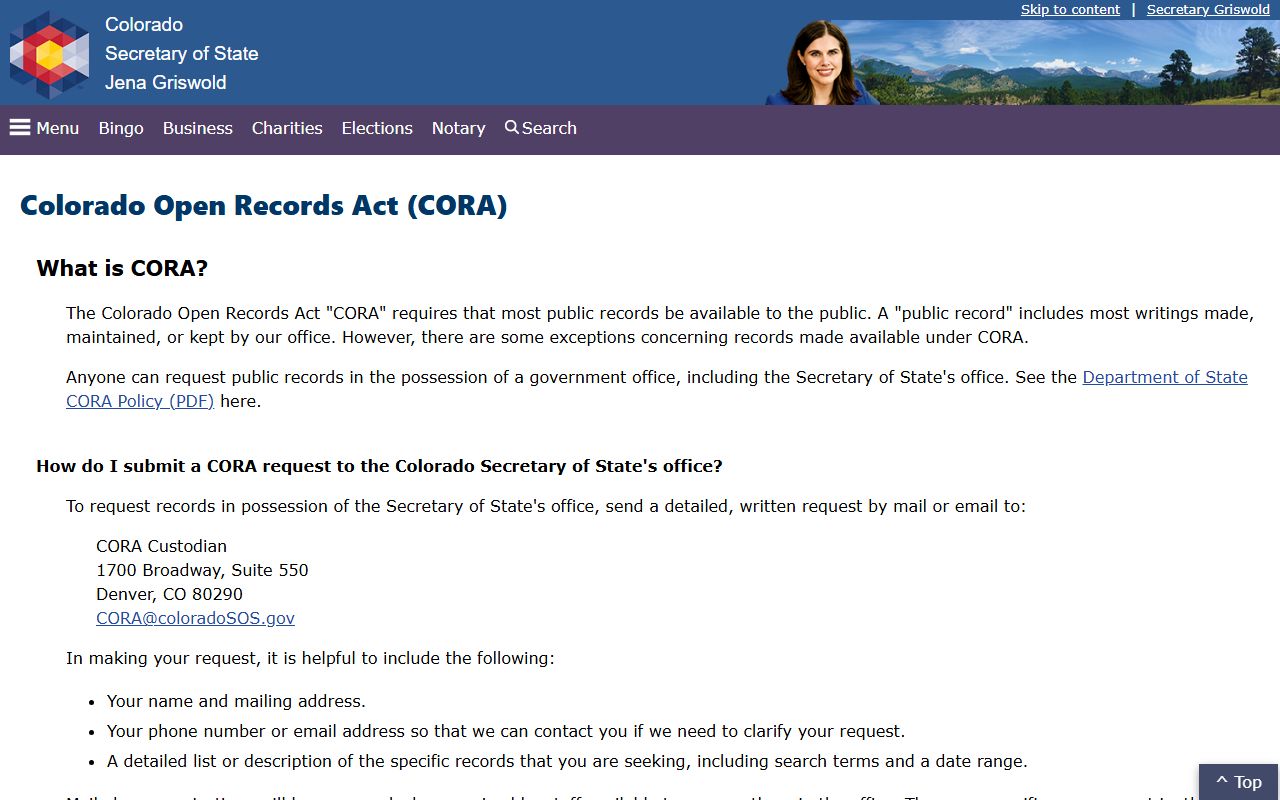
That page is a good first stop before you draft a request, since it sets the legal floor for what a city or county clerk must hand over.
Note. CORA does not apply to most court records. For Denver District Court or Denver County Court files, use the state Judicial Branch form and CJD 05-01 rules, not a CORA request.
Denver Records Held by the Clerk and Recorder
The Denver Clerk and Recorder is the main civil records office for the City and County. The office runs recording, marriages and civil unions, the public trustee, elections, and the city clerk and policy and compliance divisions. The office sits at 200 W. 14th Ave., Denver, CO 80204. Visits are by appointment only.
- Real estate recording, deeds, liens, and UCC filings: 720-865-8699, recording@denvergov.org
- Marriage and civil union licenses and committed partnership records: 720-865-8400, marriages@denvergov.org
- Public trustee and foreclosure files: 720-865-2677, foreclosures@denvergov.org
- City clerk, ordinances, financial disclosures, lobbyist registry, and contracts: 720-865-9000, cityclerk@denvergov.org
- Municipal records requests: cr.records@denvergov.org
Most recorded land documents going back many decades can be searched online through the Clerk and Recorder website. Marriage license indexes are also online. Sealed marriage files and confidential addresses are kept out of public view.
Denver Records Held by the Courts
Court files in Denver are held by the Second Judicial District. That district covers only the City and County of Denver, which makes it unique in Colorado. The district handles felony, civil, domestic relations, probate, juvenile, and water cases. Denver County Court handles misdemeanors, traffic, small claims, civil matters under $25,000, and municipal cases.
Most court records can be pulled through the state portal or by a written request to the clerk. For more detail on each kind of case file, see court records, criminal records, dockets, probate, marriage and divorce, and traffic court records.
The Colorado Revised Statutes set out which files are open and which are sealed. The official text is hosted by the General Assembly.
Colorado Revised Statutes - Office of Legislative Legal Services
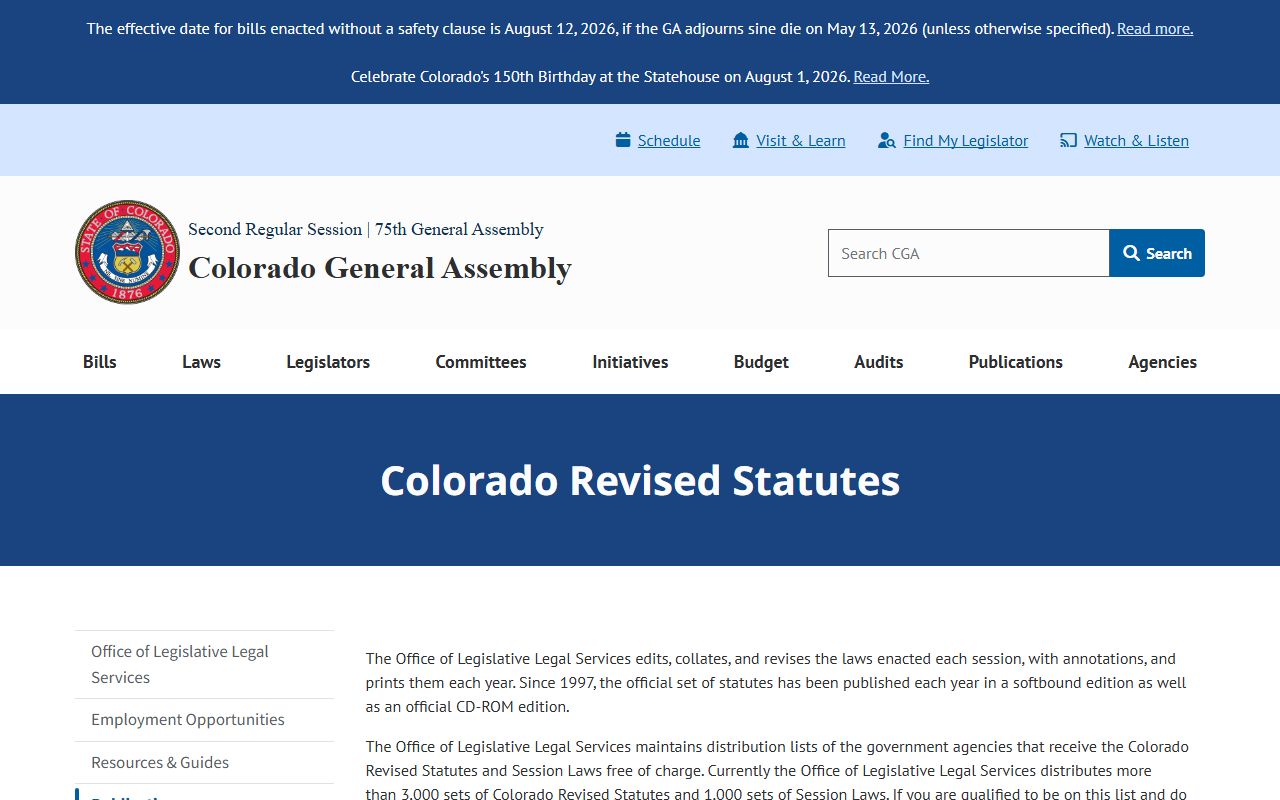
Use the statute portal to look up the exact rule that controls the record type you need before you file a court request.
Denver Records Held by the Sheriff
The Denver Sheriff Department runs the Downtown Detention Center and the Denver County Jail. It is the main source of inmate, jail, and custody data for the county. Public-facing tools include the online jail roster, daily population counts, and annual reports.
- Inmate locator: denvergov.org/InmateSearch
- Booking, charge, and bond data updated through the day
- Custody dashboards with average daily population and length of stay
- Use of force and grievance data in annual reports
For step-by-step lookups, see inmate records, released inmates, and the inmate population page. Older custody files and body-worn camera footage are CJRA records and may need a formal request.
How to File a Denver Public Records Request
The steps below work for most Denver record types. Pick the right law and office first, then move through the rest in order.
- Identify the agency that holds the record. Recorded documents go to the Clerk and Recorder. Court files go to the Denver District or County Court clerk. Arrest and jail files go to the Sheriff or Denver Police.
- Pick the right law. Use CORA for city files, CJRA for police and jail files, and CJD 05-01 or PAIRR for court files.
- Gather case numbers, parties, dates, and locations. The more facts you give, the faster the clerk can find the file.
- Fill out the request form. The state Judicial Branch form is at coloradojudicial.gov/recorddocument-request-form. For municipal files, email cr.records@denvergov.org.
- Submit the form with a photo ID if the record holds private data on you. Pay any deposit if a fee estimate is sent back.
- Wait for a reply. The Judicial Branch aims to respond within three business days. CORA custodians have three working days, with a seven-day extension allowed for good cause.
- Receive the records or a denial letter that lists the legal reason for the denial.
Denver Records Request Form Fields
The Colorado Judicial Branch records request form is the main intake form for Denver court files. The table below lists each field on the current state form.
| Field | Required | Notes |
|---|---|---|
| First Name | No | Personal requester |
| Middle Name | No | Helps with name match |
| Last Name | No | Personal requester |
| Business Name | No | For firm or agency requesters |
| No | Used for the reply | |
| Phone Number | No | Used if the clerk needs to call |
| Address Line 1 | Yes | Street address |
| Address Line 2 | No | Suite or unit |
| State | Yes | Dropdown |
| City | Yes | Mailing city |
| Zip Code | Yes | Five digits |
| Case Number | No | Speeds up the search |
| Case Type | No | Dropdown with civil, criminal, family, probate |
| Year Case Filed | No | Year the case opened |
| County or Location | No | Pick Denver for local files |
| Date of Birth | No | Helps match a party |
| Party Information | Yes | Names of parties on the case |
| Other Identifying Info | No | Free text field |
| Family Matters Documents | No | Checkboxes for decree, orders |
| Criminal Matters Documents | No | Checkboxes for charges, sentence |
| Civil Matters Documents | No | Checkboxes for complaint, judgment |
| Probate Documents | No | Checkboxes for will, letters |
| Other Documents | No | Free text |
| Certified or Exemplified | No | Check if a raised seal is needed |
| CAPTCHA | Yes | Bot check at submit |
Denver Public Records Fees
Fees vary by office. Court fees are set by the Colorado Judicial Branch. Recording fees follow state recording law. The Clerk and Recorder publishes a city fee list each year.
| Item | Amount |
|---|---|
| Paper copy from court file | $0.25 per page |
| Certified copy of court document | $20.00 per document |
| Certificate of satisfaction of judgment | $20.00 |
| Transcript of judgment | $25.00 |
| Name search by clerk | $5.00 |
| Research or redaction time | $30.00 per hour after the first hour |
| Clerk and Recorder document recording | $43.00 per document |
| Certified copy of recorded document | $1.00 cert plus $0.25 per page |
Note. A fee waiver may be granted for indigent requesters or when the records serve the public interest. Ask the custodian for the waiver form when you file.
Denver Records Response Timelines
The Colorado Judicial Branch aims to send a first reply within three business days of receiving a court record request. The clerk may need more time for older files or sealed cases. CORA custodians follow C.R.S. § 24-72-203, which gives three working days, plus up to seven extra working days when extenuating facts apply. CJRA timing for police and jail records is set by C.R.S. § 24-72-303 and is also three working days in most cases.
If a deadline passes with no reply, the requester can write to the agency head or file a court action under the law that controls the record. A denial letter must list the statute or rule used to refuse the file.
Restricted Denver Public Records
Not every file is open. Sealed and suppressed cases drop out of the public index. Juvenile delinquency files are confidential under C.R.S. § 19-1-301. Other limits cover attorney work product, ongoing investigation files, and protected personal data such as Social Security numbers, victim addresses, and minor witness names.
Sealing and expungement rules change often. The Legislative Council memo on the process of sealing or expunging criminal records is a good plain-text guide. When access to a court file is in doubt, the Public Access Committee reviews the rule.
Colorado Judicial Branch - Public Access Committee
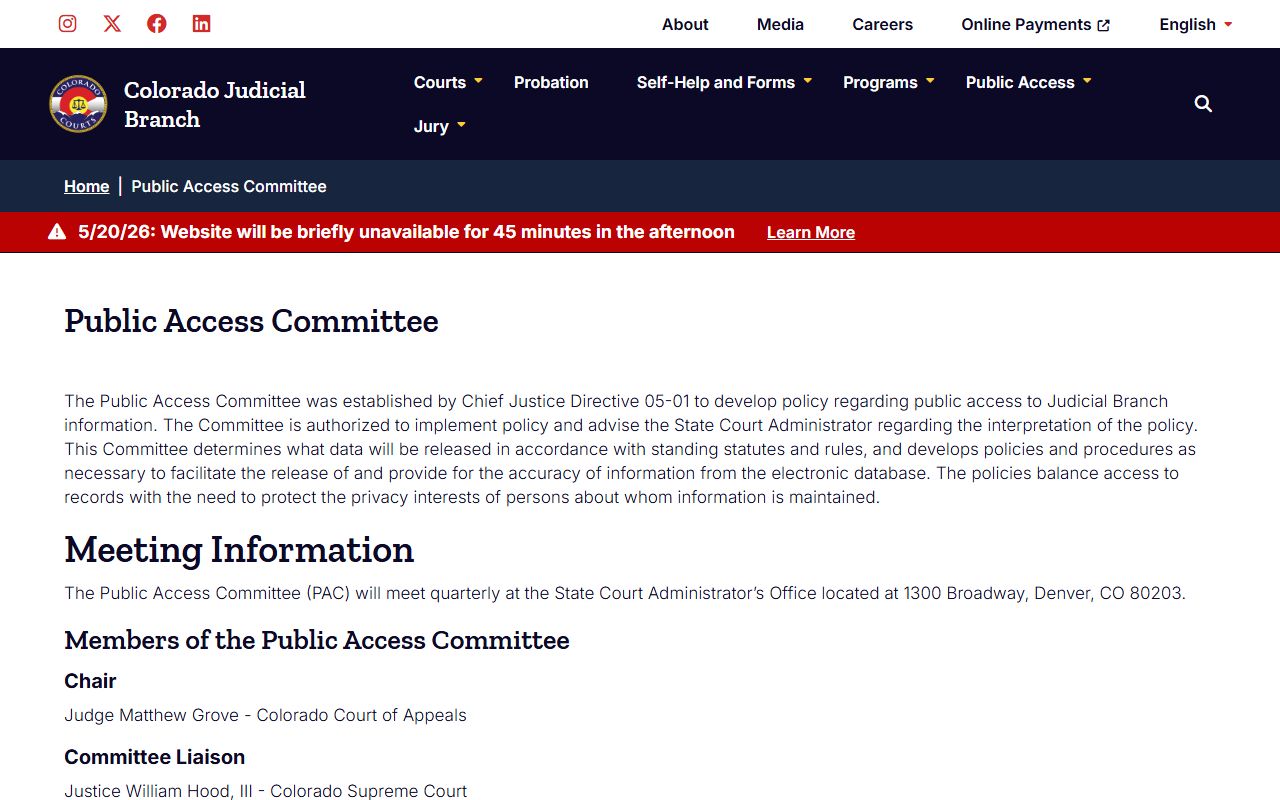
The committee posts agendas, minutes, and policy notes that show how court access rules are read in real cases.
Federal Public Records Tied to Denver
Some Denver cases land in federal court or federal custody. Those files are not county records and follow their own rules. Federal civil and criminal dockets are on PACER at pacer.uscourts.gov. The U.S. District Court for the District of Colorado sits in downtown Denver. Federal inmate lookups go through the BOP inmate locator.
Note. A Denver County clerk cannot pull federal files. Use PACER, the federal court clerk, or the BOP for those records.
Denver Public Records Help and Self-Help
Free help is open to anyone who needs it. Colorado Legal Services runs a Denver office that can take income-qualified civil cases. The state Judicial Branch posts free forms and how-to videos on its self-help site. Denver County Court runs a Pro Se Center inside the Lindsey-Flanigan Courthouse that helps with small claims and civil filings. The Public Access Committee handles policy disputes about court records.
For frequent questions on Denver County clerk and court access, see the local FAQ and the about pages.